Drafting a Treaty to Establish the International Anti-Corruption Court
by Erik Zonneveld
Drafting a Treaty to establish an International Anti-Corruption Court is a crucial step in our campaign for an IACC. This is currently a primary objective of III Europe, who are working on developing a comprehensive legal framework which will be reviewed by scholars, NGOs and states. The purpose of this evaluation process is to facilitate the assessment of the IACC’s potential impact and to invite further constructive input to strengthen its effectiveness in the future. Ultimately the Treaty would serve as the legal basis of the IACC, outlining its structure, jurisdiction and operational procedures. Similarly to the International Criminal Court (ICC), which was established by the Rome Statute in 2002, the IACC would be a permanent, treaty-based international court. By signing the Rome Statute, states empowered the ICC to investigate and prosecute war crimes, crimes against humanity and genocide. Likewise, states that ratify the IACC Treaty would confer authority upon the Court to investigate and prosecute those responsible for serious corruption offences, including bribery, embezzlement and money laundering.
“Corruption is criminal, immoral and the ultimate betrayal of public trust.”
– Antonio Guterres (Secretary-General of the United Nations)
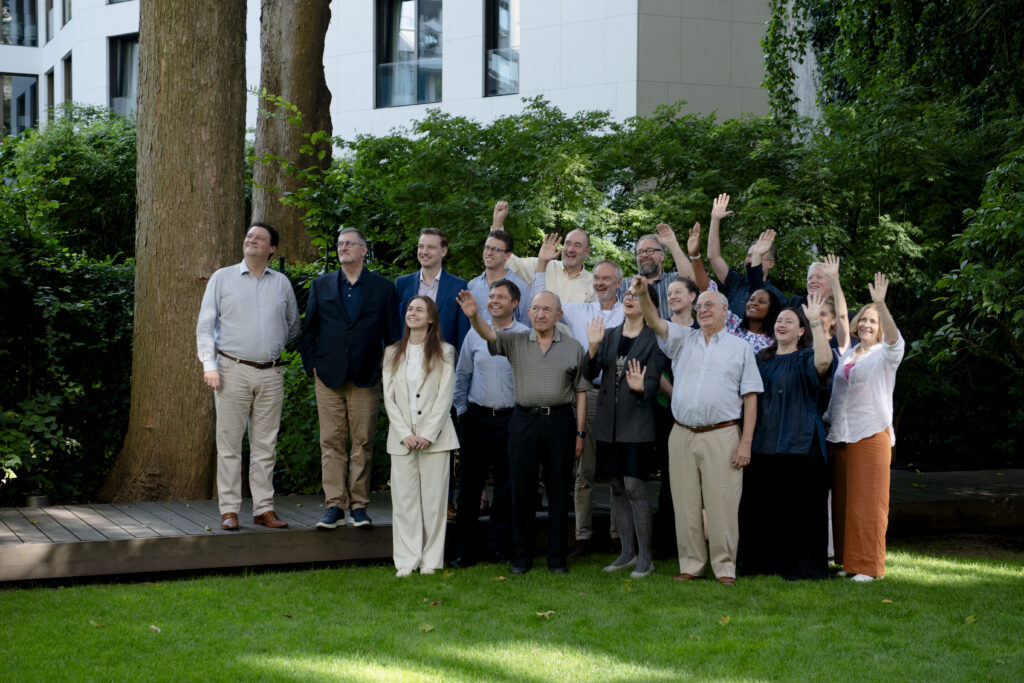
In 2022, Judge Mark Wolf, Justice Richard Goldstone and Professor Robert Rotberg published The Progressing Proposal for An International Anti-Corruption Court through the American Academy of Arts and Sciences . This article laid the academic groundwork of the Campaign to Establish the International Anti-Corruption Court. Since its release, the campaign has garnered widespread international support, with over 50 former heads of state and government, 100 civil society organizations, and more than 30 Nobel laureates signing the Declaration in support of the IACC. Coordinated by III Europe and its US-based counterpart, the campaign convened a group of over 70 legal experts from five continents to draft a treaty for the IACC. Over the course of the past year, these treaty-drafting experts, working on a pro bono basis within various subcommittees, have collaborated intensively to develop a comprehensive Draft Treaty, each focusing on different legal dimensions essential to the Court’s establishment.
Eventually, states will sign the IACC Treaty to allow the IACC to investigate and prosecute crimes such as bribery and money laundering.
“While it is true that many governments pay lip service to the rule of law and to the need for effective and efficient anti-corruption mechanisms, the truth is that for too many of them, their anti-corruption efforts are far from effective and efficient. Exacerbating the problem is a glaring enforcement gap in the international framework for combatting corruption.“
– Justice Richard Goldstone (Former Justice of the Constitutional Court of South Africa, former Prosecutor of the ICTY and ICTR and Chair of the IACC Treaty Committee)

The Treaty will be an advocacy tool, a basis for input from third parties and a starting point for inter-state negotiations.
Before signing the IACC Treaty, states will engage in negotiations to determine the conditions under which they would be willing to establish the Court. Our Draft Treaty serves a threefold purpose in this process. Firstly, it will be used as an advocacy tool, demonstrating to key stakeholders how the IACC would be an effective and efficient mechanism for holding corrupt officials and their enablers accountable. Secondly, it provides a foundation for consultation and input from civil society, states, scholars and the private sector. Engaging a broad and diverse group of stakeholders is essential to ensure the Draft Treaty reflects a wide range of expertise. Thirdly, the Draft IACC Treaty will serve as the initial reference point for intergovernmental negotiations, guiding discussions among interested states as they define under which terms they will sign the IACC Treaty.
Creating a draft IACC Treaty is a crucial step in the campaign for and establishment of the IACC.
The IACC would serve as a forum to fairly and effectively prosecute and punish kleptocrats and their transnational networks of co-conspirators. Creating a draft IACC Treaty is a primary objective of III Europe, as it is a crucial step in the campaign for and establishment of the IACC. Grand corruption – the abuse of public power for private gain by a nation’s leaders (kleptocrats) – is a major barrier to responding effectively to pandemics, fighting climate change, mitigating refugee crises, promoting democracy and human rights, meeting the UN Sustainable Development Goals, establishing international peace and security, and securing a more just, rules-based global order. Routine extortion by kleptocrats threatens the integrity of markets for goods and services by creating unfair advantages for unethical business.
“We, conscious of the fact that corruption plagues the modern world, call for the establishment of an International Anti-Corruption Court”
– Signatories to the Declaration Calling for the Establishment of the International Anti-Corruption Court
For regular updates on the work and activities of III Europe, please subscribe to our IACC Campaign newsletter.
Published on 6th December 2024